Late-stage vehicle
Midas II: late-stage positions in private AI.
The Midas I method, applied to the next wave: AI-native companies and the businesses that benefit from AI. Details in the memorandum.
Sources
At a glance
- Strategy
- Late-stage positions in private AI and AI beneficiaries
- Structure
- Delaware limited partnership; CrossWork, LLC as general partner
- Portfolio
- 12 to 18 positions
- Deployment
- Paced across the investment period, position by position.
The window
Agentic AI is the platform shift of the decade. Its private window is short.
The likely winners are already identified: venture-funded, late-stage and not yet public. They are reachable now, and past shifts suggest they will not stay reachable for long.
Cloud · 2010 to 2012
Cloud software leaders such as ServiceNow listed within a few years of their last private rounds, and the pre-IPO window on them closed with the listing.
Mobile · 2008 to 2013
Facebook listed in May 2012 and Twitter in November 2013. The late-stage private windows on both closed with those listings.
Agentic AI · 2026
Cerebras listed in May 2026. OpenAI and Anthropic have filed confidentially for IPOs. The window is narrowing.
Sources
- 10. SEC EDGAR, 2012: ServiceNow, Inc. prospectus (Form 424B4).
- 9. TIME, November 7, 2013: Twitter goes public, the most anticipated tech IPO since Facebook's in May 2012.
- 1. CNBC, May 13, 2026: Cerebras prices IPO above expected range.
- 6. TechCrunch, June 8, 2026: Following Anthropic, OpenAI files confidentially for IPO.
Construction
The mandate
What the fund buys, how much of it, and how long it holds.
- 01
Entry criteria
We look for companies valued at $1B+ with $100M+ in revenue and a visible path to liquidity: an IPO, a tender or a strategic sale. No pre-product bets.
- 02
Concentration
Twelve to eighteen names, each one argued for in writing and reviewed by operators who know the category.
- 03
Sizing and reserves
Position sizes reflect conviction and liquidity path. Capital is held back for follow-on opportunities and fund expenses rather than fully deployed on day one.
- 04
Holding through liquidity
We expect to hold through an IPO and to distribute cash or shares once positions can be sold or transferred.
Sources
Pipeline
Where we are looking now
Representative categories, not commitments; names for reference only.
AI model and platform
IPO or tender path
Thesis
Frontier models are becoming an input to most knowledge work. A small set of labs and platforms sets the pace for everyone building on top of them, and spend is concentrating where model quality meets distribution. We think this layer captures value now because the leaders are turning model quality into enterprise relationships and daily usage that are hard to displace.
What a leader looks like at this stage
We look for companies valued at $1B+ with $100M+ in revenue and a visible path to liquidity: an IPO, a tender or a strategic sale.
- Enterprise depth: large organizations running the platform in production across several functions, not in pilots.
- Gross-margin shape: margins that hold or widen as inference costs fall, because pricing tracks value delivered rather than tokens served.
- Distribution: a consumer or developer surface that feeds enterprise demand, and partnerships with the clouds and devices people already use.
- Moat: proprietary usage signal, research talent and the capital to keep training at the frontier.
Route to liquidity
- IPO
- Cerebras · IPO, May 2026
- Tender
- Company-run tenders for employees and existing holders
- Strategic sale
- Meta · Scale AI, strategic investment, June 2025
Reference companies
Named for reference only; not holdings or recommendations, except where marked as a holding.
- Application leaders
- Perplexity (a holding)
Market context
- PwC estimates generative and agentic AI could add US$2.6 to 4.4 trillion a year to global GDP by 2030.
- 40%Gartner expects 40% of enterprise applications to embed task-specific AI agents by the end of 2026, up from under 5% in 2025.
What we watch
- Model-cost deflation: price per token falling faster than usage grows.
- Dependence on a few compute suppliers and cloud partners.
- Regulatory and copyright pressure on training data and model release.
Sources
- 1. CNBC, May 13, 2026: Cerebras prices IPO above expected range.
- 29. Bloomberg, June 13, 2025: Meta finalizes $14.3 billion Scale investment, hires its CEO.
- 5. PwC Middle East, 2024: Agentic AI, the new frontier in GenAI.
- 27. Gartner, August 26, 2025: Gartner predicts 40% of enterprise apps will feature task-specific AI agents by 2026, up from less than 5% in 2025.
Market map
The agentic stack
Where the fund looks, layer by layer. Qualitative map; no holdings are implied.
Agentic stack map
Hardware
- ComputePurpose-built inference silicon is collapsing the cost per token.
- EdgeOn-device processors are moving agents onto phones, cars and machines.
- Agent-speed infrastructureOne agent goal fans out into thousands of calls; systems built for people have to be rebuilt.
Software
- Multi-agent systemsPlatforms that let agents hand work to each other and to people.
- System of intelligenceSystems of record turning into engines that run the workflow.
- Data entropyUnstructured, decaying corporate knowledge that retrieval and agents depend on.
Sources
Discipline
Discipline: two positions, two lessons
Still held
Stripe
Backed for durable, profitable payments infrastructure that sits underneath a growing share of internet commerce.
Written off
Thrasio
A debt-funded roll-up of consumer brands, exposed to the rate cycle. When rates rose, the debt that built it undid it. The lesson we apply now: organic, low-debt growth.
Sources
Archive
On the record in 2011. Research on Facebook and Twitter, months before the Facebook IPO.
In November 2011, months before Facebook listed and two years before Twitter did, we published research on both under the MidasLP name.
- Nov 2011MidasLP research: Facebook
- Nov 2011MidasLP research: Twitter
- May 2012Facebook IPO
- Nov 2013Twitter IPO
“Facebook is expected to own 72% of all social network advertising revenues and 6.1% of worldwide online ad spending in 2012.”
“Twitter is a real-time information network that allows its users to connect to the latest information about anything they find interesting.”
Original MidasLP research, November 2011.
Sources
- 34. Facebook Newsroom, May 17, 2012: Facebook announces pricing of initial public offering; shares expected to begin trading on the Nasdaq Global Select Market on May 18, 2012.
- 35. Intercontinental Exchange (NYSE), November 7, 2013: Twitter celebrates initial public offering and first day of trading on the New York Stock Exchange.
Risk
Risk factors (summary)
Investing in the fund involves substantial risk. The full risk factors are in the memorandum; read them before investing.
- Loss of capital. You can lose some or all of your investment.
- Illiquidity. Interests cannot be readily sold or redeemed; plan to hold for the full term.
- Exit risk. IPOs, tenders and sales may not happen, or may happen later or on worse terms than expected.
- Valuation uncertainty. Private-company prices are estimates and can change sharply.
- Concentration. A portfolio of 12 to 18 names means each position matters.
- Transfer and consent risk. Transfers of private shares need issuer consent and can be blocked, delayed or repriced.
- Company and technology risk. Products, models and markets can fail or be overtaken.
- Market risk. Public-market conditions affect listings, lock-up expiries and prices.
- Financing and dilution. New rounds can dilute positions or rank ahead of them.
- Access and deployment. The fund may not find enough suitable positions on acceptable terms.
- Information limitations. Private companies disclose less, and less often, than public ones.
- Key persons. The fund depends on a small team and its advisor network.
- Conflicts of interest. The general partner and its affiliates manage other vehicles and relationships.
- Fees, expenses and taxes. Fees, carried interest, expenses and taxes reduce what investors receive.
- Forward-looking statements. Plans and expectations here may not be achieved.
Sources
Three edges
Why we can reach what others cannot
- 01
Access through the board
Positions come through an advisory board of former operators, not through public channels.
- 02
An operator bench
Advisors bring deal flow, sit in diligence and open doors to management.
- 03
Late-stage discipline
Revenue, a liquidity path and price discipline before conviction.
Sources
Discipline
Real companies. Real revenue.
What we buy, and what we do if the cycle turns.
Many investors worry about an AI bubble. So do we. That is why we back companies with real revenue, real customers and a visible path to liquidity, rather than pre-revenue stories.
Bubbles are a pricing problem; discipline on revenue and price is the answer.
Roughly $100M+ in annual revenue and a $1B+ valuation, with a visible path to liquidity.
- Private AI and AI-beneficiary companies
- Valued above one billion dollars
- Above one hundred million dollars of revenue
- A visible path to liquidity
- Reached through the advisory board
If the cycle turns
- Real revenue only.
- We also back non-AI businesses that benefit from AI's cost savings.
Sources
Exposure
Two ways to own the shift
The fund also invests in companies that benefit from AI, not only AI-native ones, so the portfolio is not tied to the AI cycle alone.
a.
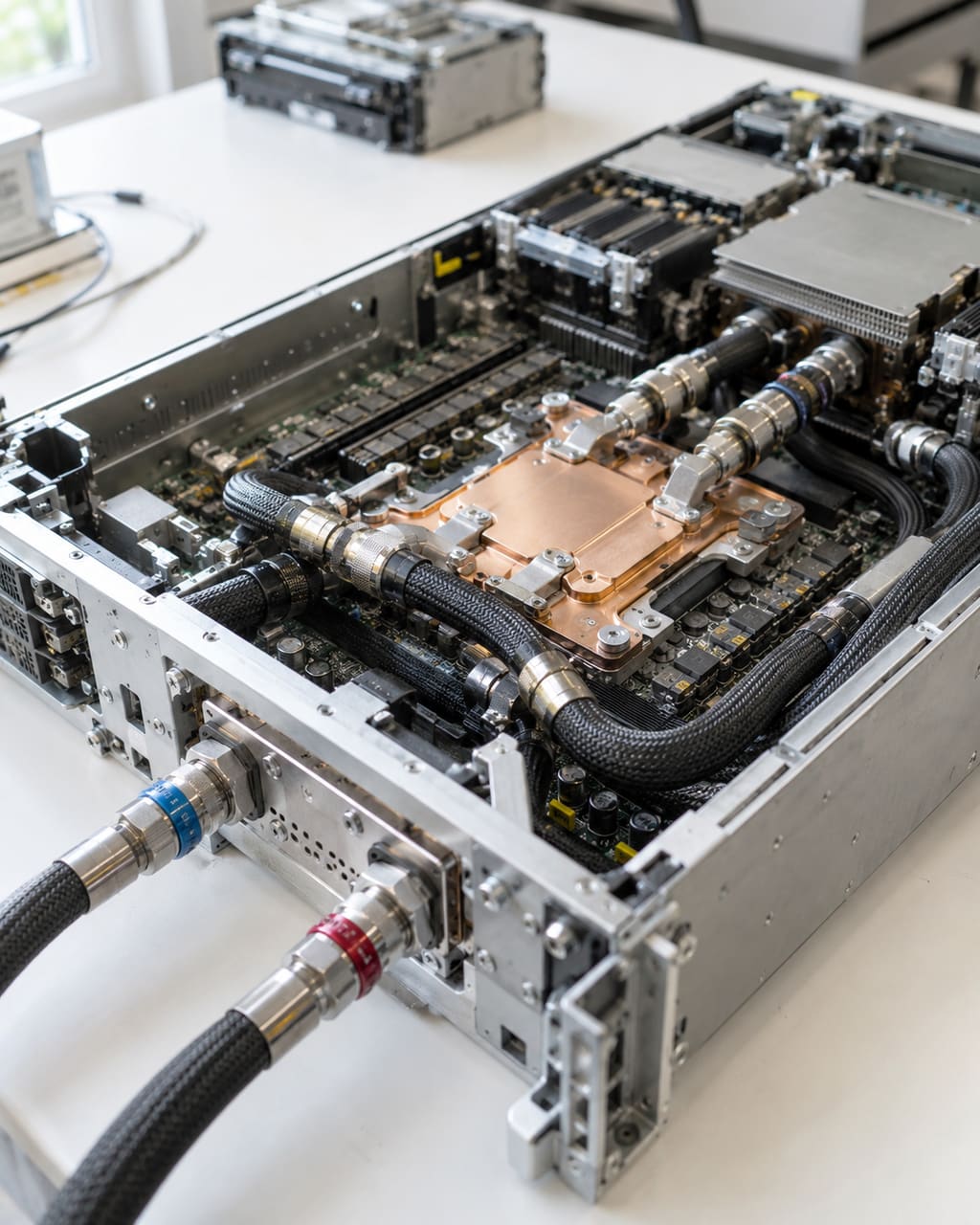
AI-native infrastructure and platforms
The companies building compute, models, data and agent platforms.
AI compute · AI models · AI data · data infrastructure
b.
AI beneficiaries
Businesses whose margins and growth improve because of AI: cost-savings and productivity beneficiaries, and AI-enabled incumbents.
Commerce software · risk and compliance software · logistics · payments

Sources