

Skip to content

    CrossWork · Late-stage private AI

    Seven recent exits valued above $50 billion. The second-largest US IPO of 2026 by a first-time issuer. Now: agentic AI.

    CrossWork is a venture capital group for the late stage: large private companies in markets still being built, with access through an advisory board of former operators.

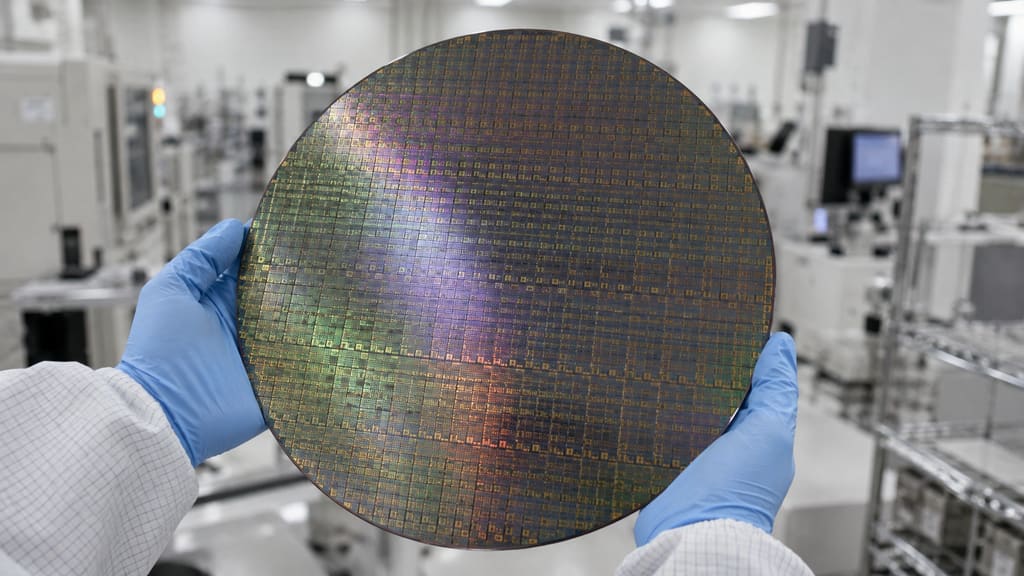
    Illustration: a silicon wafer held in gloved hands in a clean room

    Thesis

    The AI platform shift is the largest capital formation event since the internet, and most of it is happening in private.

    Three observations, and the value curve that follows from them.

    1. 01

      The value moved before the IPO

      Companies stay private longer, so the steepest part of the value curve now sits before the IPO.

    2. 02

      Access is relationship-gated

      The rounds that matter are allocated through relationships. Public-market investors arrive after the repricing.

    3. 03

      Operators see the winners first

      The winners are identifiable before the market names them, by people who operate in the field. That is what our advisory board is for.

    privatelisting, then publicprivatelisting, thenpublic
    Illustrative. Not to scale; no values implied.

    Read the full argument

    Exits

    Seven recent exits. More than $50 billion of value at exit.

    Realized exits have already returned capital to investors. Early positions in companies that went on to define their categories. Detailed performance is available to verified investors in the CrossWork portal. See the outcomes

    Interactive: select an exit to jump to its story
    Sources
    1. 2. Crunchbase News, May 29, 2024: the biggest VC-backed exit of 2024, AuditBoard.
    2. 28. Database Trends and Applications, May 2025: IBM officially closes acquisition of DataStax.
    3. 29. Bloomberg, June 13, 2025: Meta finalizes $14.3 billion Scale investment, hires its CEO.
    4. 30. SingleStore, September 10, 2025: SingleStore announces growth buyout led by Vector Capital (press release).
    5. 32. SingleStore, October 16, 2025: SingleStore and Vector Capital close growth buyout to accelerate Enterprise AI Innovation.
    6. 1. CNBC, May 13, 2026: Cerebras prices IPO above expected range.
    7. 25. As of June 30, 2026, per Renaissance Capital 2Q 2026 US IPO Market Review; ranking among first-time issuers. Bloomberg, May 14, 2026. SK Hynix's $26.5B US ADR offering (Bloomberg, July 10, 2026) is a US listing of a company already public in Korea and is excluded.
    8. 26. Publicly reported values only: Cerebras $56.4B fully diluted at the $185 IPO price (Bloomberg/Yahoo Finance, May 14, 2026); Scale AI: >$29B implied by Meta's $14.3B purchase of a 49% stake in June 2025, a partial realization for holders (Reuters/CNBC, June 2025); AuditBoard >$3B (Hg, May 23, 2024); Reltio $1.26B (SAP Form 6-K, May 2026). DataStax (IBM, 2025), SingleStore (Vector Capital, 2025) and Salsify (Cinven, agreed July 2026, pending) are excluded because terms were not disclosed.
    9. 31. SAP News Center, May 2026: SAP completes acquisition of Reltio.
    10. 11. Salsify, July 22, 2026: Cinven to acquire Salsify, Inc. (press release).
    1. Acquired by Hg · May 2024

      AuditBoard

      $3B+

      Audit, risk and compliance software; the largest VC-backed acquisition of 2024 at the time, per Crunchbase.

    2. Acquired by IBM · closed May 28, 2025

      DataStax

      Acquired

      IBM bought the Cassandra and Langflow company to put enterprise data within reach of AI.

    3. Meta investment · June 2025

      Scale AI

      $14B

      Meta paid about $14 billion for a 49% stake, valuing Scale at more than $29 billion; a partial realization for holders.

    4. Growth buyout led by Vector Capital · closed Oct 16, 2025

      SingleStore

      Acquired

      A private-equity path to liquidity for a top AI-focused database; terms undisclosed.

    5. IPO · May 2026

      Cerebras

      $5.6 billion

      raised; the second-largest US IPO of 2026 by a first-time issuer, behind only SpaceX.

    6. Acquired by SAP · closed May 7, 2026

      Reltio

      $1.3B

      SAP bought the master-data company to make SAP and non-SAP data AI-ready.

    7. Agreed to be acquired by Cinven · July 2026 · pending

      Salsify

      Agreed

      Product-experience software for consumer brands; closing subject to regulatory approvals.

    Why now · Compute

    Why now. Agents multiply demand for tokens.

    Agents do work at machine speed, so demand for AI compute compounds with every task they take on.

    40× AI token demand, 2026 to 2030.

    Global AI token consumption is expected to grow about 40 times over the next four years, according to Qualcomm CEO Cristiano Amon (COMPUTEX keynote, June 1, 2026).

    Illustration: a keynote stage whose screen shows AI token demand rising from 32 billion in 2026 to 1.3 trillion in 2030, a 40× increase

    Qualcomm CEO Cristiano Amon, COMPUTEX keynote, June 1, 2026. Qualcomm's combined third-party sourcing and internal analysis.

    Sources
    1. 24. MarketBeat via TradingView, June 2026: Qualcomm says 2026 is the 'Year of Agents' (COMPUTEX keynote, June 1, 2026): global token demand in a 10-second window, 31.7 billion (2026) to 1.27 trillion (2030), per Qualcomm's combined third-party sourcing and internal analysis.
    2. 3. Seeking Alpha, June 2026: Qualcomm CEO Cristiano Amon sees a 40-fold AI token surge by 2030 (COMPUTEX 2026 keynote, June 1, 2026).

    The window

    Platform shifts have short pre-IPO windows. This is one of them.

    Each platform shift produced a small set of category leaders, and once they listed the private window on them closed. The pattern is repeating in agentic AI, faster.

    • Cloud · 2012

      ServiceNow, a cloud category leader, listed in 2012.

    • Mobile · 2012 to 2013

      Facebook listed in May 2012 and Twitter in November 2013: the social-mobile leaders went public within eighteen months of each other.

    • Agentic AI · 2026

      Cerebras listed in May 2026 and SpaceX in June 2026. OpenAI and Anthropic have filed confidentially for IPOs, and Discord reportedly filed confidentially in January 2026.

    The window thesis and the agentic stack

    Sources
    1. 10. SEC EDGAR, 2012: ServiceNow, Inc. prospectus (Form 424B4).
    2. 9. TIME, November 7, 2013: Twitter goes public, the most anticipated tech IPO since Facebook's in May 2012.
    3. 1. CNBC, May 13, 2026: Cerebras prices IPO above expected range.
    4. 7. SpaceX, June 11, 2026: pricing of initial public offering (Nasdaq: SPCX).
    5. 6. TechCrunch, June 8, 2026: Following Anthropic, OpenAI files confidentially for IPO.
    6. 8. Bloomberg, January 6, 2026: Discord is said to file confidentially for IPO.

    Discipline

    Real companies. Real revenue.

    What we buy, and what we do if the cycle turns.

    Many investors worry about an AI bubble. So do we. That is why we back companies with real revenue, real customers and a visible path to liquidity, rather than pre-revenue stories.

    Bubbles are a pricing problem; discipline on revenue and price is the answer.

    Roughly $100M+ in annual revenue and a $1B+ valuation, with a visible path to liquidity.

    Private AI and AI-beneficiary companiesValued above one billion dollarsAbove one hundred million dollars of revenueA visible path to liquidityReached through the advisory board
    1. Private AI and AI-beneficiary companies
    2. Valued above one billion dollars
    3. Above one hundred million dollars of revenue
    4. A visible path to liquidity
    5. Reached through the advisory board
    Illustrative geometry. Criteria as stated above.

    If the cycle turns

    • Real revenue only.
    • We also back non-AI businesses that benefit from AI's cost savings.

    Exposure

    Two ways to own the shift

    The fund also invests in companies that benefit from AI, not only AI-native ones, so the portfolio is not tied to the AI cycle alone.

    a.

    AI-native infrastructure and platforms

    The companies building compute, models, data and agent platforms.

    AI compute · AI models · AI data · data infrastructure

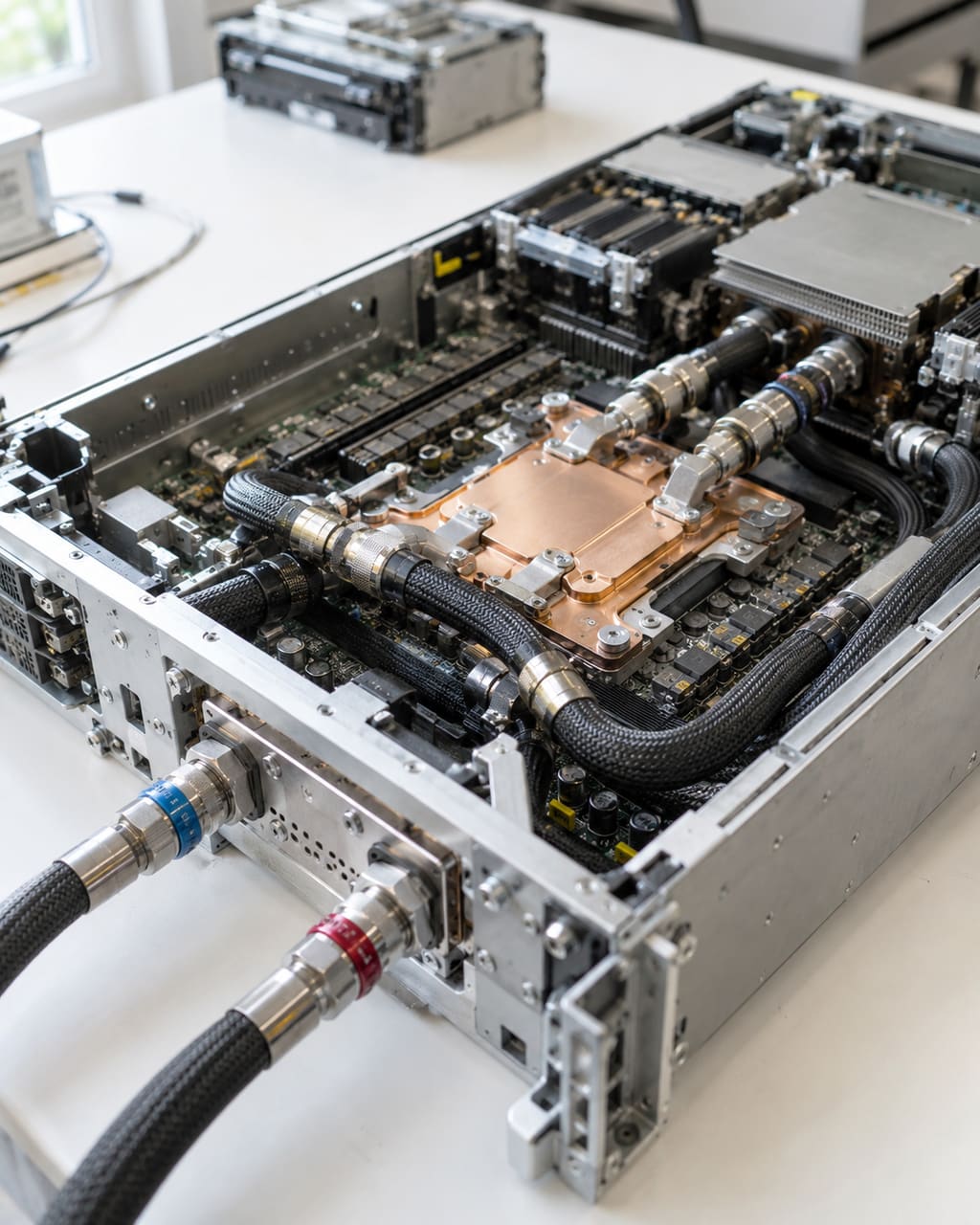
    Illustration: a liquid-cooling cold plate on a server board

    b.

    AI beneficiaries

    Businesses whose margins and growth improve because of AI: cost-savings and productivity beneficiaries, and AI-enabled incumbents.

    Commerce software · risk and compliance software · logistics · payments

    Illustration: a bright, modern office floor

    Portfolio · Cerebras

    Wafer-scale compute. Cerebras builds the processor the size of the wafer.

    Most AI chips are cut from a wafer; Cerebras keeps the whole wafer as one processor.

    Cerebras: one wafer, not one chip

    Interactive: switch the compared measure
    Compare
    WSE-3 Turbo · one wafer
    Cerebras WSE-3 Turbo
    46,225 mm²
    NVIDIA H100 die
    814 mm²
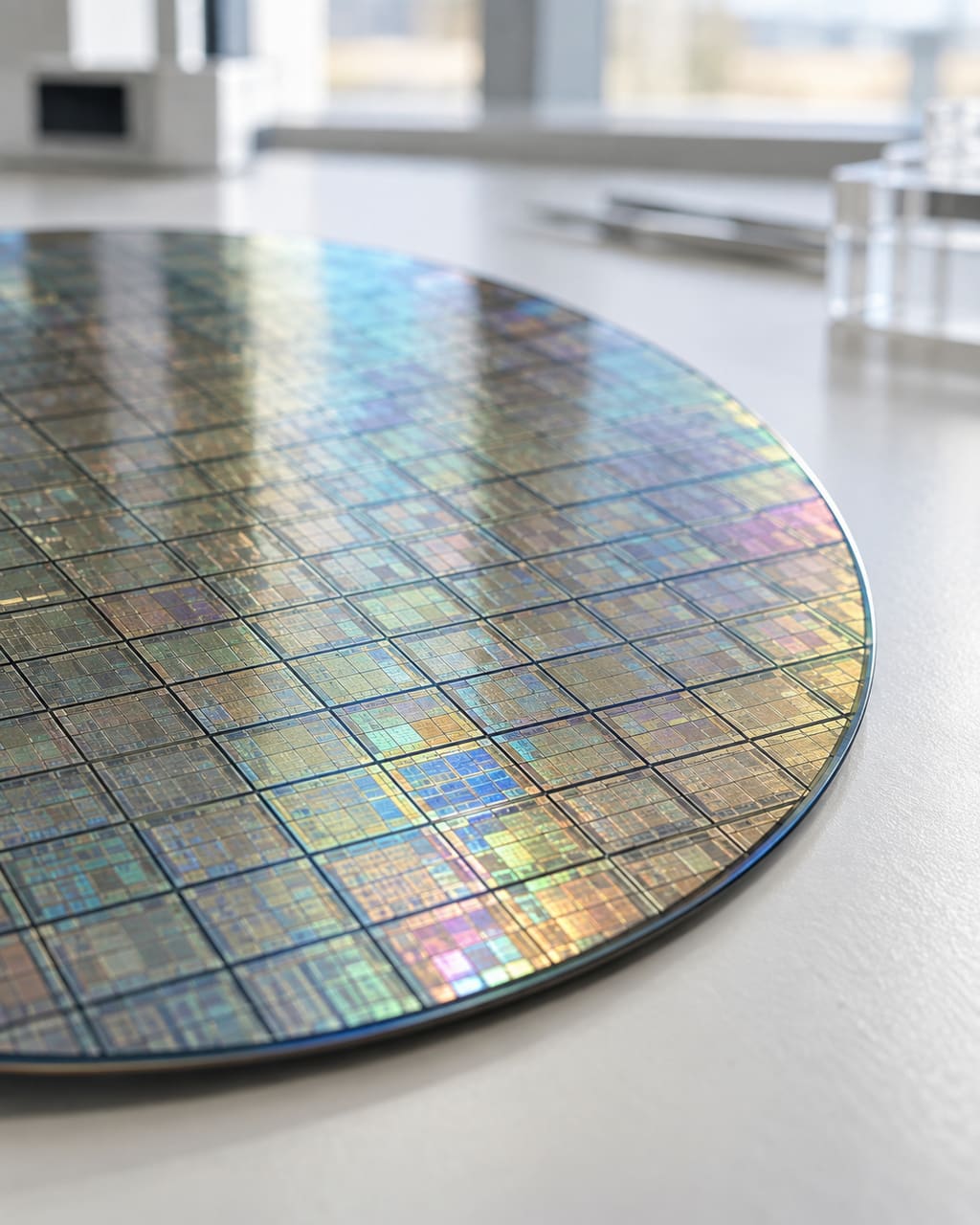
    Illustration: macro view of a silicon wafer surface

    The wafer is about 57 times the area of a leading GPU die, drawn here to true relative scale.

    Keeping a model's working data on one wafer avoids shuttling it between chips; Cerebras says its systems run inference up to 30 times faster than GPU systems. For buyers, that is cost and speed per token.

    Illustrative geometry, sourced figures.

    Sources
    1. 18. Cerebras: Wafer-Scale Engine 3 Turbo (WSE-3T) specifications, product page.
    2. 19. NVIDIA, 2022: NVIDIA H100 Tensor Core GPU Architecture whitepaper.

    Portfolio · Stripe

    Payments at national scale. Stripe moves more money than many economies.

    Stripe's 2025 total volume, ranked against national GDP on one shared scale.

    If Stripe's 2025 volume were an economy

    1. Stripe volume$1.9T
    2. Canada$2.3T
    3. Spain$1.9T
    4. Australia$1.8T
    5. Mexico$1.8T
    6. Indonesia$1.4T
    7. Netherlands$1.3T
    8. Saudi Arabia$1.3T
    Stripe volume, 2025
    1.9 trillion dollars of total volume in 2025
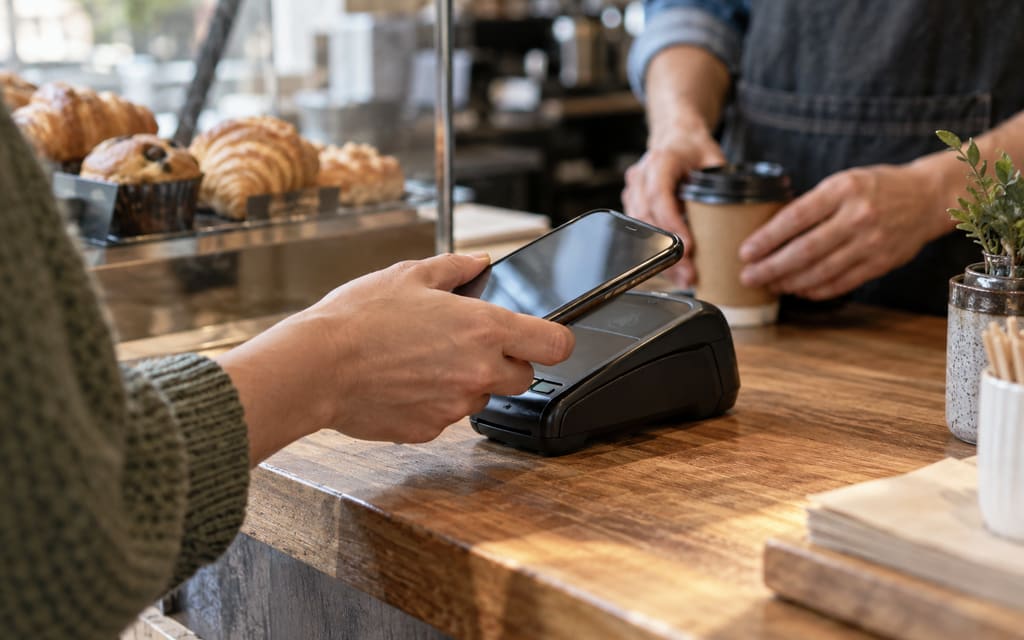
    Illustration: a customer paying by phone at a café counter

    Equivalent to roughly 1.6% of global GDP, per Stripe.

    Payments infrastructure compounds with the economy it serves, and agents will soon be paying for things too.

    Nominal GDP, IMF WEO April 2026; Stripe total payment volume 2025, per Stripe. Volume processed is not revenue.

    Illustrative geometry, sourced figures.

    More on the portfolio page

    Sources
    1. 21. Stripe, February 24, 2026: Stripe 2025 annual letter.
    2. 33. IMF, April 2026: World Economic Outlook database, GDP at current prices (NGDPD), US$ billions, 2025.

    Case studies

    The method, in two calls

    Two positions, and what the market saw afterwards.

    Case study · 2023 to 2026

    Why we backed Cerebras in 2023, and what the market saw in 2026

    2023May 20262023May 2026

    Our operators saw wafer-scale compute as a platform, not a chip: the constraint on training frontier models was moving from algorithms to hardware, and Cerebras had built for that.

    In May 2026 the market agreed. Its IPO raised $5.6B at $185 a share, the largest US tech IPO since Uber.

    Case study · Midas I to 2024

    Why AuditBoard

    Midas I2024Midas I2024

    A system of record for audit and risk, bought by operators before investors noticed it. The people who had run those functions knew what they would pay for.

    In 2024 Hg acquired it for $3B+, the largest such purchase of 2024 at the time.

    Sources
    1. 1. CNBC, May 13, 2026: Cerebras prices IPO above expected range.
    2. 2. Crunchbase News, May 29, 2024: the biggest VC-backed exit of 2024, AuditBoard.

    Portfolio

    Selected current and realized holdings

    Company names are shown as text, for identification only.

    • AuditBoardRisk software
    • DataStaxData
    • ReltioData
    • SingleStoreData
    • SalsifyCommerce software
    • CerebrasAI compute
    • Scale AIAI data
    • PerplexityAI search
    • StripePayments
    • Neo4jData
    • SambaNovaAI compute
    • DataRobotAI platform

    See the portfolio

    Advisory board

    An information advantage

    Our advisory board is made of former operators: finance chiefs, engineering leaders, scientists and founders. They hear about companies before the market does, sit in diligence on the businesses they know best, and tell us when to walk away.

    Meet the advisory board

    Ask the board

    Interactive: choose a company, then ask the board.

    Pick a company. Three former operators frame it.

    Finance chief

    Is the revenue concentrated in a few buyers, and how does that change as inference demand broadens?

    Engineering leader

    Wafer-scale is a systems bet, not a chip bet. The question is the software stack that keeps customers from porting away.

    Go-to-market operator

    Who signs the purchase order: a lab, a cloud or an enterprise? Each buys for different reasons.

    Illustrative commentary written by CrossWork; not advice and not a view on price.

    Interactive

    Sit on the board for one deal

    Play a board seat on a company that is now public, from first signal to what happened.

    Start

    Who invests

    The room is chosen with care. Family offices, institutions and people who have run companies.

    Every investor comes to CrossWork through a conversation.

    • Family offices

      Patient capital with a long horizon, looking for access that public channels do not provide.

    • Institutions

      Long-term capital adding late-stage private companies that public portfolios cannot reach.

    • Former chief executives

      They have run large companies and know how a category leader is built, and how one stalls.

    • Finance chiefs

      They read a business the way its eventual buyers will, from the numbers up.

    • Founders with exits

      They have built and sold companies, and know what a durable one looks like from the inside.

    • Long-time public-market investors

      They watched growth move from the public markets into private rounds, and prefer to be where it happens.

    How it works

    1. 01

      Request access

      Tell us who you are and what you bring.

    2. 02

      A conversation

      We talk about what you are looking for and whether we are the right fit.

    3. 03

      The memorandum, if it fits

      If it fits on both sides, we share the memorandum.